
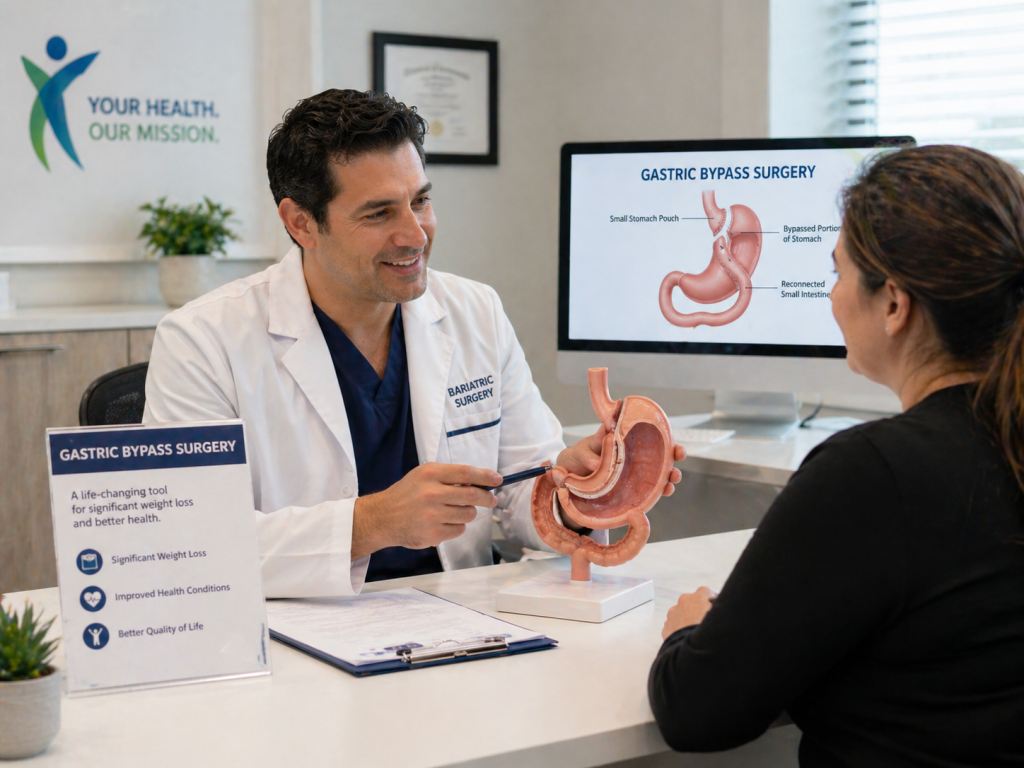
Roux-en-Y Gastric Bypass Revision (RYGB Revision)
A Roux-en-Y gastric bypass revision is a targeted surgical procedure used to correct anatomical changes that can occur years after an initial gastric bypass. These changes may weaken the original operation’s effectiveness, making it harder for patients to maintain portion control, feel satisfied after meals, or keep weight off long-term. A revision helps restore the anatomy closer to its original postoperative size so the gastric bypass can function the way it was designed to work.
Understanding Weight Regain After Gastric Bypass
Weight regain after gastric bypass is common and does not mean the patient “failed.” The body naturally adapts over time. The gastric pouch can stretch, the stoma can widen, and eating patterns can shift. When this happens, patients may notice they can eat more food than before, feel full less quickly, and slowly regain weight. Weight regain may also result from changes in hunger cues, increased liquid calories, or inconsistent follow-up. These are medical, physiological challenges—not issues of motivation or willpower.
How a Revision Helps Restore the Operation’s Effectiveness
A revision reinforces the original goals of the Roux-en-Y gastric bypass. When the pouch or stoma becomes larger than intended, revision surgery can rebuild these structures to the proper size. This restores early fullness, strengthens portion control, and reactivates the physiological advantages that made the bypass successful in the first place. Unlike limb-lengthening procedures, a standard RYGB revision does not significantly increase malabsorption. Instead, it focuses on safely rebuilding the anatomy so patients can regain control over eating patterns and long-term weight management.
Why a Refresher on Gastric Bypass Matters for Revision Patients
Even though revision candidates have already undergone a gastric bypass, many had their first operation years ago—or at another facility—and may not have received detailed, anatomy-based education. Others may simply not remember the specifics of how the bypass works or why certain problems develop.
A clear refresher on pouch function, stoma size, limb configuration, and digestion ensures patients understand why weight regain happens and how a revision can help. This foundation is important for safety, informed consent, and long-term success after revisional surgery.
Importance of Lifelong Bariatric Follow-Up
Long-term follow-up is essential after both the original bypass and any revision. Regular visits help monitor weight trends, nutritional status, pouch health, stoma function, and lifestyle patterns.
Patients who stay connected to their bariatric team—surgeon, dietitian, and clinical staff—consistently achieve better long-term success, fewer nutritional issues, and more stable weight control. Lifelong follow-up is not optional; it is a key part of maintaining the metabolic and physiological benefits of the gastric bypass.
What a Gastric Bypass Revision Helps With (Mini-List)
- Restores proper pouch size
- Recreates an appropriately sized stoma
- Improves early fullness and portion control
- Addresses anatomic causes of weight regain
- Reinforces long-term weight stability
- Supports improved metabolic health
A Roux-en-Y gastric bypass revision is a focused, anatomy-correcting procedure that rebuilds key components of the original bypass when stretching or dilation reduces its effectiveness. By restoring normal pouch size and recreating a properly sized stoma, revision surgery helps re-establish early satiety, better portion control, and long-term weight management. Because many patients received their original bypass years earlier or at a different center, a clear refresher on gastric bypass anatomy is essential before moving forward. Lifelong follow-up remains a core requirement for maintaining results and protecting long-term health.
Understanding the Gastric Bypass Revision Procedure
A gastric bypass revision is a minimally invasive operation performed to correct anatomical changes that can occur years after the original Roux-en-Y gastric bypass. Although the bypass is a powerful and durable weight-loss tool, the anatomy can gradually adapt over time. The gastric pouch may slowly stretch, the gastrojejunal anastomosis (stoma) may widen, or a rare gastro-gastric fistula may develop. When these changes occur, patients often notice increased hunger, larger meal capacity, reduced satiety, and eventual weight regain. A revision restores the size and function of the pouch and stoma so the bypass can work the way it was designed to—providing early fullness, slower eating, and structured portion control.
Why the Anatomy Sometimes Changes Over Time
The stomach and small intestine are dynamic organs. With years of exposure to food pressure, stretching forces, and natural tissue remodeling, the small gastric pouch may increase in size. Even a modest increase can allow significantly larger meal volumes, diminishing early satiety.
Likewise, the stoma is a hand-sewn or stapled connection that can slowly widen. When the stoma becomes too large, food passes through too quickly, preventing the hourglass-like slowing effect that encourages small bites, slower eating, and predictable fullness.
These changes do not represent a failure of the patient—they reflect normal biological adaptation that can occur even in highly motivated individuals.
What a Gastric Bypass Revision Is Designed to Do
A revision procedure aims to restore the key restrictive elements of the original bypass. This includes:
- Recreating a small, egg-sized gastric pouch
- Narrowing and reshaping the stoma to its intended size
- Reestablishing slow, controlled passage of food
- Reinforcing early satiety and portion control
By reconstructing these structures, the revision once again allows the pouch to fill gradually, encourages mindful pacing during meals, and helps patients regain control over hunger and food volume.
What a Revision Does Not Do
A revision is not intended to dramatically increase malabsorption. It does not lengthen the Roux limb, shorten the common channel, or convert the operation into a more extreme form of bypass.
Overly aggressive malabsorption can pose long-term risks such as protein–calorie malnutrition, vitamin deficiencies, and gastrointestinal complications. For these reasons, most revisions focus solely on restoring restriction—fixing the anatomical issues that are responsible for diminished function—while preserving the safe, physiologic design of the original Roux-en-Y gastric bypass.
When a Revision Becomes Medically Appropriate
A revision is recommended when diagnostic studies confirm that structural changes are interfering with weight control. Common indications include:
- Enlarged gastric pouch: When the pouch no longer limits meal size.
- Dilated stoma: When fullness disappears quickly after meals.
- Gastro-gastric fistula: A rare connection allowing food to enter the bypassed stomach.
- Anatomically driven weight regain: When regain is linked to measurable changes rather than behavior alone.
- Persistent symptoms: Such as rapid emptying, uncontrolled hunger, or loss of satiety related to anatomy.
Before recommending revision, the bariatric team carefully distinguishes anatomical causes from behavioral patterns. This ensures the surgery is performed only when structural abnormalities are present.
Why Revision Requires Careful Evaluation
Revision surgery is technically more complex than the original bypass. Scar tissue, altered anatomy, and prior surgical planes require precise dissection. For this reason, revision is only performed after thorough testing, including endoscopy and swallow studies, to confirm the exact nature of the anatomical change.
Because revisional surgery is safest when performed by an experienced bariatric surgeon in a high-volume specialty hospital, Taylor Bariatric Institute provides the ideal setting: consistent surgical teams, bariatric-trained staff, and advanced imaging and diagnostic capabilities.
A gastric bypass revision is a focused operation used to correct anatomical stretching or dilation that may occur years after the initial bypass. By restoring a smaller pouch and a properly sized stoma, the revision re-establishes early fullness, slows the pace of eating, and renews the physiologic advantages of the Roux-en-Y gastric bypass. It does not increase malabsorption; instead, it repairs the structural components needed for effective, long-term weight control. When guided by detailed diagnostic evaluation and performed in a specialized bariatric environment, revision surgery is a safe and effective option for patients experiencing anatomy-related weight regain.
Understanding the Anatomy and Physiology of the Roux-en-Y Gastric Bypass
Before discussing a revision, it is important for patients to understand how the original Roux-en-Y gastric bypass functions. Many individuals seeking a revision had their first operation years earlier or at another facility, and may not recall the details of how the anatomy was reconstructed. A clear refresher ensures that patients understand why certain anatomical changes can reduce the effectiveness of the bypass and how restoring the anatomy helps regain long-term control.
The goal of the gastric bypass is to combine restriction, slowed eating, mild malabsorption, and sugar sensitivity into a powerful metabolic tool that supports durable weight loss.
Key Components of the Gastric Bypass Anatomy
The gastric bypass changes the normal digestive pathway by creating a small stomach pouch and rerouting the small intestine. Understanding these structures helps clarify why stretching or dilation can interfere with long-term success.
Gastric Pouch
The original stomach, roughly the size of a small football, is divided to create a new pouch about the size of an egg. This smaller pouch limits how much food can be eaten at one time.
Stoma (Gastrojejunal Anastomosis)
A narrow, hand-sewn or stapled opening is created between the pouch and a segment of the small intestine. This opening serves as a controlled outlet that slows the passage of food, functioning like an hourglass to reinforce slower eating.
Roux Limb
A segment of small intestine is brought up and connected to the pouch. Food travels down this limb for about two to two and a half feet before meeting digestive juices. Because this limb contains little to no digestive enzymes, calorie absorption is reduced during this segment.
Biliopancreatic Conduit (BPC)
The bypassed portion of the stomach and the first segment of small intestine continue to carry stomach acid, bile, and pancreatic enzymes. These digestive juices travel down the BPC and eventually mix with food further downstream.
Common Channel
This is the point where the Roux limb and BPC merge. After this point, normal digestion resumes and nutrients are absorbed efficiently.
This Y-shaped configuration (the “Roux-en-Y”) is what gives the bypass its name.
How the Bypass Creates Weight Loss and Metabolic Improvement
The gastric bypass works through several coordinated mechanisms that make weight loss more achievable and more sustainable.
Restriction
The small pouch physically limits meal size. Patients feel full with far smaller portions, improving portion control and reducing overeating.
Slowed Eating Through the Stoma
Because the stoma is intentionally narrow, food empties more slowly. This helps patients eat mindfully, take smaller bites, and experience early fullness—one of the most important contributors to long-term success.
Mild Malabsorption
By bypassing approximately two to five feet of small intestine, the operation reduces calorie absorption by roughly ten to fifteen percent. This mild malabsorption provides a metabolic advantage without the risks associated with extensive intestinal bypass.
Sugar Sensitivity (Dumping Syndrome)
When patients consume large amounts of refined sugar, some may experience discomfort such as cramping, rapid heartbeat, or flushing. This response is not harmful, but it serves as a natural deterrent to high-sugar foods that can interfere with weight loss. This built-in behavioral reinforcement helps many patients avoid refined sugars and stay on track.
Why Understanding the Original Anatomy Matters for Revision
A revision is only effective when it corrects the specific anatomical change responsible for weight regain. If the pouch has stretched, it must be reshaped. If the stoma has widened, it must be reconstructed. If a fistula has formed, it must be closed.
By reviewing how the bypass works—and how each component supports weight control—patients gain a clearer understanding of why certain structural changes lead to reduced fullness, increased hunger, and eventual weight regain.
Mechanisms of the Gastric Bypass (Mini-List)
- Smaller gastric pouch promotes early fullness
- Narrow stoma slows the eating process
- Mild malabsorption reduces calorie absorption
- Sugar sensitivity discourages high-sugar foods
- Roux limb and BPC preserve safe, physiologic digestion
The Roux-en-Y gastric bypass is a powerful metabolic operation that promotes weight loss through restriction, slowed eating, mild malabsorption, and sugar sensitivity. The anatomy includes a small gastric pouch, a narrow stoma, and a rerouted intestinal pathway designed to enhance fullness and reduce calorie absorption. When anatomical stretching or dilation occurs, these mechanisms weaken—leading to increased hunger, larger meal capacity, and weight regain. Understanding the original physiology is essential before moving forward with a revision, as a successful revision restores the structures that make the bypass effective.
Review the Gastric Bypass procedure
Learn more about Sleeve Gastrectomy
Understanding Why the Gastric Bypass May Lose Effectiveness Over Time
The Roux-en-Y gastric bypass is a powerful and durable metabolic operation, but like any medical treatment, its effectiveness can diminish when the anatomy changes or when certain eating patterns develop over time. Many patients who seek revision surgery are surprised to learn that weight regain after gastric bypass is not uncommon. It does not reflect personal failure—rather, it is usually related to predictable, correctable factors. Understanding these factors helps patients make sense of their symptoms and sets the stage for identifying who may benefit from revision.
Anatomic Causes of Weight Regain
Some patients experience structural changes years after the operation that directly interfere with the bypass’s ability to provide early fullness and controlled portion sizes.
Pouch Stretching
The gastric pouch is designed to hold a small amount of food—usually about the volume of an egg. Over time, repeated stretching, larger meal volumes, or natural tissue remodeling may increase pouch capacity. Even slight enlargement can significantly reduce satiety and allow more food per meal.
Stoma Dilation
One of the most important components of the bypass is the narrow opening (stoma) between the pouch and the small intestine. This opening slows the passage of food. If it gradually widens—even by a few millimeters—food empties too quickly. Patients lose the “braking mechanism” that slows eating and promotes early fullness.
Gastro-Gastric Fistula
Rarely, a small passage may form between the gastric pouch and the bypassed stomach due to tissue changes, inflammation, or staple-line breakdown. This allows food to flow into the remnant stomach, reducing restriction and rapidly increasing capacity.
These anatomical issues are among the most common, documented, and treatable causes of weight regain after gastric bypass.
Behavioral and Dietary Contributors
Although anatomical factors often play a central role, behavior and eating patterns can influence how well the bypass continues to work. These behaviors are rarely intentional—they are natural adaptations that can develop slowly over time.
Grazing Throughout the Day
Eating small amounts of food frequently (“grazing”) bypasses the restrictive mechanism of the pouch, leading to steady calorie intake that accumulates quickly.
High-Calorie Liquids
Smooth foods and liquids such as juices, sweetened coffee drinks, energy drinks, and milkshakes pass through the pouch and stoma rapidly, contributing calories without producing fullness.
High-Sugar Foods
Over time, some patients experience less sensitivity to sugar or may gradually reintroduce sweets. These foods are energy-dense and can slow or reverse weight loss.
Reduced Physical Activity
Changes in mobility, lifestyle demands, or medical issues may reduce activity levels, allowing fewer calories to be burned throughout the day.
While behavior plays a role, it is critical to recognize that behavioral changes often develop in response to anatomical changes. When satiety decreases due to pouch or stoma enlargement, grazing patterns naturally emerge as the body seeks more frequent energy intake.
Eating Disorder Patterns
Certain patterns—such as binge eating, compulsive snacking, or emotional eating—may resurface after surgery. These patterns can override the body’s normal satiety signals and lead to increased caloric intake. Importantly, these behaviors may be more likely to appear when anatomical issues weaken the bypass’s restrictive effect. Identifying these patterns is not about blame—it is about ensuring patients receive the support, counseling, or nutritional guidance needed for long-term success.
Distinguishing Anatomy From Behavior
One of the most important goals of the evaluation process is to determine whether weight regain is caused primarily by anatomical changes, behavioral factors, or a combination of both.
Diagnostic imaging and endoscopy can identify structural issues such as pouch dilation, stoma enlargement, or fistulas. If these findings are present, a revision may be medically appropriate and highly effective. When anatomy is normal, patients may benefit from medical weight management, nutritional counseling, or behavioral support rather than surgery.
Why Failure Does Not Mean the Bypass “Stopped Working”
The gastric bypass itself does not suddenly fail. Instead, its supporting structures—pouch size, stoma width, and digestive flow—may change over time. These changes are predictable, measurable, and treatable. For many patients, revision surgery becomes an opportunity to restore the original anatomy, regain the physiologic advantage of the bypass, and renew long-term weight control.
Gastric bypass can lose effectiveness when anatomical changes—such as pouch stretching, stoma dilation, or fistula formation—reduce restriction and early fullness. Behavioral patterns like grazing or high-calorie liquids may develop alongside these changes, contributing further to weight regain. By distinguishing between anatomical and behavioral causes, the bariatric team can determine whether revision surgery is appropriate. Understanding why the original bypass may fail empowers patients to take the next step toward restoring the operation’s effectiveness and achieving lasting weight control.
Determining Candidacy for a Roux-en-Y Gastric Bypass Revision
A gastric bypass revision is considered when a patient’s anatomy or physiology has changed in ways that limit the original operation’s effectiveness. Not every patient experiencing weight regain is an appropriate candidate, and not every patient with regain requires surgery. The aim of this evaluation is to identify individuals whose weight regain or symptoms are driven by identifiable, correctable anatomical changes.
A thorough, structured assessment ensures revision surgery is recommended only when it is safe, medically appropriate, and likely to produce meaningful improvement.
Patients With an Enlarged Gastric Pouch
One of the most common indicators for revision is a pouch that has stretched beyond its intended size. The pouch is meant to hold a very small amount of food—typically similar to the volume of an egg. When the pouch increases in size, patients may notice:
- Larger portions are required to feel full
- Fullness occurs later or not at all
- Meal sizes gradually return to preoperative levels
Endoscopy can measure pouch size accurately. When a significantly enlarged pouch is present and symptoms match the findings, revision surgery may be appropriate.
Patients With a Dilated Stoma
The stoma (or gastrojejunal anastomosis) plays a major role in slowing the passage of food. When this opening stretches—even by several millimeters—it can dramatically reduce satiety. Patients with a dilated stoma often report:
- Feeling hungry soon after meals
- Eating more quickly than before
- Needing larger meals to feel satisfied
- A loss of the “slow emptying” sensation they once had
Stoma dilation is one of the clearest and most correctable reasons for weight regain after gastric bypass. Recreating the correct stoma size can significantly restore early fullness.
Patients With a Gastro-Gastric Fistula
Though rare, a fistula—a passage between the gastric pouch and the bypassed (remnant) stomach—can form. This allows food to enter the remnant stomach instead of staying within the intended pouch.
A fistula can increase stomach capacity, reduce the restrictive effect of the bypass, and contribute to weight regain. Revision can close the fistula and restore proper function of the bypass anatomy.
Patients Whose Weight Regain Cannot Be Explained by Behavior Alone
Weight regain can occur for many reasons, including behavioral patterns such as grazing, liquid calories, or emotional eating. However, when patients demonstrate:
- Stable eating patterns
- Consistent follow-up
- Reasonable adherence to dietary guidelines and still experience significant regain, anatomical issues become more likely.
- A revision may be appropriate when these findings align with measurable structural changes.
Patients Who Are Medically Fit for Revisional Surgery
Because revision surgery is more complex than the initial bypass, medical readiness is essential. Good candidates typically:
- Have stable cardiac health or appropriate cardiac clearance
- Have manageable pulmonary conditions
- Are not actively smoking or using nicotine
- Are able to maintain adequate nutrition
- Have no uncontrolled medical issues that would increase surgical risk
The evaluation ensures safe anesthesia planning and optimal recovery.
Patients Who Demonstrate Commitment to Follow-Up and Lifestyle Requirements
Revision surgery restores anatomy, but long-term success still requires:
- Structured eating
- Limiting liquid calories
- Prioritizing protein
- Taking daily vitamins
- Attending regular follow-up visits
Ideal candidates show motivation to follow these guidelines consistently after surgery. Patients who are not ready for these changes may benefit more from medical weight management before considering revision.
When Revision Is NOT Appropriate
Revision is generally not recommended when:
- The pouch is normal in size
- The stoma is not significantly dilated
- Symptoms are primarily behavioral
- Weight regain is due to grazing, sugar intake, or high-calorie liquids without anatomical abnormalities
- Chronic steroid use or uncontrolled medical issues increase surgical risk
- The patient is not ready to commit to long-term follow-up and dietary changes
In such cases, non-surgical approaches are considered first.
Ideal Candidates for Revision (Mini-List)
- Enlarged gastric pouch confirmed by endoscopy
- Dilated stoma causing rapid emptying
- Gastro-gastric fistula
- Weight regain linked to anatomical changes
- Medically stable and cleared for surgery
- Motivated to maintain lifelong follow-up and structured eating
The best candidates for gastric bypass revision are individuals whose weight regain or symptoms are caused by measurable anatomical changes such as a stretched pouch, widened stoma, or fistula. Revision is also appropriate for patients who remain medically stable, motivated, and committed to long-term follow-up. When anatomy is normal and weight regain is related to behavior alone, non-surgical management is usually recommended. Careful evaluation ensures revision surgery is offered only when it is safe, appropriate, and likely to restore long-term success.
Understanding the Evaluation Process Before a Gastric Bypass Revision
Before recommending a Roux-en-Y gastric bypass revision, the bariatric team must confirm that the patient’s anatomy has changed in a way that explains their symptoms or weight regain. Revisional surgery is more complex than primary surgery, so the evaluation process is thorough, evidence-based, and centered on safety.
This workup identifies whether the pouch or stoma has stretched, whether a fistula is present, and whether medical factors might influence surgical risk. It also ensures every patient receives the most appropriate treatment—whether surgical or non-surgical—based on objective findings.
Upper Endoscopy (EGD): Measuring the Pouch and Stoma
Endoscopy is one of the most important tools in evaluating bypass anatomy. During this procedure, a thin, flexible camera is inserted through the mouth while the patient is lightly sedated. This allows the surgeon to directly visualize the gastric pouch, stoma, and upper small intestine.
Endoscopy helps determine:
- Pouch size: Has it stretched beyond its intended egg-sized capacity?
- Stoma diameter: Has the outlet widened, causing rapid emptying?
- Presence of ulcers or inflammation that may affect revision planning
- Evidence of a gastro-gastric fistula (a rare connection to the remnant stomach)
Endoscopy provides the most reliable measurements of pouch and stoma size, making it essential for confirming candidacy.
Swallow Study (Upper GI Contrast Study)
A swallow study is a non-invasive X-ray test that evaluates how liquid flows through the gastric pouch and down the small intestine. The patient drinks a contrast material while images are taken in real time.
A swallow study helps identify:
- Abnormal flow patterns suggesting stoma dilation
- Delayed or excessively rapid emptying
- Unusual pathways that may indicate a fistula
- Structural concerns that may not be visible on endoscopy alone
This test complements endoscopy by showing how the anatomy functions under real physiologic conditions.
Medical Assessment and Optimization
Because revision surgery is more technically demanding than the original bypass, medical optimization is essential. The evaluation focuses on overall health, chronic conditions, and readiness for anesthesia.
This may include:
- Cardiac clearance for patients over 50 or with known heart disease
- Pulmonary clearance for individuals with asthma, COPD, or sleep apnea
- Review of current medications, including those that must be adjusted before surgery
- Blood work to assess nutritional status, vitamin levels, and metabolic health
The goal is to ensure that any underlying health concerns are addressed early, reducing the risk of complications.
Nutritional and Vitamin Evaluation
Blood tests are conducted to check levels of:
- Iron
- Vitamin B12
- Folate
- Calcium
- Vitamin D
- Protein markers
Long-term bypass patients may have nutritional deficiencies, especially if their stoma has enlarged or if eating patterns have shifted. Identifying and treating these issues before surgery supports safe healing and smoother recovery.
Insurance Requirements and Documentation
Many insurance carriers require specific documentation before approving a revision. Requirements may include:
- Confirmation of anatomical abnormalities
- Evidence of medical necessity
- Documentation of previous weight-loss attempts
- Records of nutritional counseling
- Psychological evaluation in some cases
Taylor Bariatric Institute’s insurance team manages this process for patients, ensuring all documentation is complete and submitted correctly.
Learn about our Insurance and Approval Process.
Psychological Readiness for Revisional Surgery
Revision candidates must demonstrate a clear understanding of the lifestyle changes required after surgery. A psychological evaluation may be recommended to assess coping strategies, emotional eating patterns, and readiness for long-term follow-up. This is not a barrier to surgery—it is a supportive tool that helps ensure each patient receives the resources they need to be successful.
Why the Diagnostic Workup Matters
The workup ensures that revision is done for the right reasons. If anatomy is normal, revisional surgery is unlikely to help and may expose the patient to unnecessary risk. Conversely, when anatomical abnormalities are present, revision can be highly effective. Accurate diagnosis protects patient safety and allows the bariatric team to create a personalized surgical plan.
The diagnostic evaluation before bypass revision includes endoscopy, swallow studies, nutritional assessments, and medical clearance to confirm that anatomic changes are present and that surgery is safe. This comprehensive approach is essential for distinguishing between structural issues and behavior-based challenges. By identifying the exact cause of weight regain or symptoms, the bariatric team ensures that revision surgery is reserved for patients who will benefit most—and will undergo the procedure safely and successfully.
Understanding the Surgical Approach to Gastric Bypass Revision
Revision of a Roux-en-Y gastric bypass is more technically complex than the original operation because the surgeon must work through scar tissue, altered anatomy, and previous surgical planes. For this reason, revisional surgery should be performed only by a high-volume bariatric surgeon in a bariatric specialty hospital.
The goal of a revision is to safely reconstruct the gastric pouch and the gastrojejunal anastomosis (stoma) so they return to their intended size and function. This restores early fullness, slows eating, and re-establishes the physiologic benefits of the bypass.
Minimally Invasive Laparoscopic Approach
Most gastric bypass revisions are performed laparoscopically. This means the surgeon makes several small incisions in the abdomen and uses long, thin instruments and a high-definition camera to perform the operation.
A laparoscopic approach offers multiple advantages:
- Smaller incisions and less pain
- Faster recovery
- Reduced infection risk
- Better visualization of the anatomy
- Shorter hospital stay in most cases
High-volume surgeons are skilled in navigating scar tissue safely, which is essential in revisional cases.
Dissection of Scar Tissue and Exposure of the Prior Anatomy
Before reconstructing the pouch or stoma, the surgeon must carefully separate scar tissue that naturally forms after any abdominal surgery. This process involves:
- Gently freeing the gastric pouch from surrounding tissues
- Identifying the previous anastomosis
- Locating the remnant stomach and bypassed segments
- Ensuring a clear operative field without injuring nearby structures
This step is meticulous and requires significant expertise. A clean surgical field is necessary for accurate pouch creation and stoma reconstruction.
Transection and Removal of the Enlarged Segment
Once the pouch and stoma are fully exposed, the surgeon evaluates their size, shape, and function. If the pouch is enlarged, a stapling device is used to divide and remove the overstretched portion.
If the stoma is dilated, the surgeon removes the enlarged connection so a new one can be created. Removing the old stoma restores the ability to control the outlet size and recreate the slow, hourglass-like emptying effect essential for early fullness.
Re-Creation of a Smaller Gastric Pouch
After removing the stretched areas, the surgeon constructs a new gastric pouch. The goal is to recreate a pouch similar in size to the one formed during the initial bypass—approximately the size of an egg.
A properly sized pouch:
- Limits the volume of food that can be eaten
- Reinforces portion control
- Helps patients feel full more quickly
- Supports long-term weight management
The surgeon ensures the pouch is securely sealed with rows of precision-placed staples.
Re-Creation of the Stoma (Gastrojejunal Anastomosis)
The next step is to create a new connection between the pouch and the Roux limb. This connection, called the stoma, is reconstructed at the correct diameter—wide enough for safe passage of food, yet narrow enough to slow emptying. Re-establishing this critical component helps restore the physiologic slowing effect that supports mindful eating and durable satiety.
Reconnection of the Roux Limb
After constructing the new stoma, the Roux limb is reattached to the reconstructed pouch. The surgeon ensures smooth alignment, healthy blood supply, and an airtight, watertight connection.
This restores normal food flow through the Roux limb, prevents leakage, and rebuilds the Y-shaped anatomy characteristic of the gastric bypass.
Expected Operative Time
The length of surgery varies depending on how much scar tissue is present and how complex the revision needs to be.
- Simple revisions may take 60–90 minutes
- More complex revisions may take 2–2.5 hours
The consistency of the surgical team and the experience of the surgeon play major roles in maintaining both safety and efficiency.
Safety Advantages of a Bariatric Specialty Hospital
Performing revision surgery in a bariatric specialty hospital provides several benefits:
- Bariatric-trained nursing staff
- Higher nurse-to-patient ratios
- Dedicated anesthesia teams experienced in bariatric physiology
- Standardized clinical pathways for revisional surgery
- Specialty equipment designed for bariatric procedures
- Faster response to patient needs post-operatively
These factors contribute to lower complication rates and a smoother recovery.
Revision of the gastric bypass is a minimally invasive laparoscopic operation in which the surgeon removes stretched portions of the pouch and stoma, reconstructs them to their proper size, and re-establishes the Roux limb connection. Because scar tissue and altered anatomy make revisional surgery more complex, it is best performed by an experienced bariatric surgeon in a dedicated bariatric hospital. The reconstructed pouch and stoma restore early fullness, slow eating, and renew the physiologic benefits of the original bypass—helping patients regain long-term weight control.
Understanding Weight Loss Expectations After Gastric Bypass Revision
Weight loss after a gastric bypass revision is meaningful and medically beneficial, but it differs from the results typically seen after a primary gastric bypass. Because revision patients have already undergone one bariatric operation—and because metabolic adaptation has occurred over time—the expected weight loss is more modest than what patients experienced the first time.
However, for patients whose pouch or stoma has stretched, restoring proper anatomy can significantly improve satiety, portion control, and long-term weight stability. When paired with consistent follow-up and healthy habits, revision surgery can produce strong, durable weight-loss outcomes.
Typical Weight Loss Range After Revision
Most patients lose approximately 50 percent of their excess body weight after a gastric bypass revision. This generally occurs over 12 to 18 months.
For example:
- A patient who is 100 pounds above their ideal weight may expect to lose about 50 pounds
- A patient 80 pounds above ideal weight may lose 40 pounds
These numbers are averages, not guarantees. Some patients lose more; others lose slightly less. The outcome depends on anatomy, metabolism, lifestyle, and follow-up patterns.
Why Weight Loss After Revision Differs From the Primary Operation
During the first bypass, patients typically experience powerful hunger reduction, strong behavioral reinforcement, and dramatic changes in appetite-regulating hormones. With a revision, many of these hormonal adaptations have already occurred, so the revision works mainly by restoring mechanical restriction, not by recreating the entire early metabolic shift of the primary bypass.
This is why the goal of revision is to reinforce the physiologic advantages of the bypass—not to reproduce the full effect of the first operation.
Factors That Influence Weight-Loss Success
While anatomy plays a crucial role, several patient-centered factors influence weight loss after revision:
Portion Control Adherence
Patients who follow structured eating habits and prioritize protein tend to lose more weight.
Avoiding Grazing and Liquid Calories
Grazing and high-calorie beverages bypass restriction and significantly blunt weight loss.
Physical Activity
Regular movement supports metabolism and improves overall energy balance.
Vitamin Compliance and Nutrition Stability
Healthy nutrient levels promote better recovery, energy, and long-term metabolic function.
Follow-Up Appointments
Patients who attend scheduled visits achieve better and more predictable results because nutritional, behavioral, and anatomical concerns are addressed early.
Comparison With Primary Gastric Bypass Results
A primary Roux-en-Y gastric bypass typically results in 60 to 80 percent excess weight loss. Revision generally results in approximately 50 percent, which is still clinically meaningful.
Although the revision is not expected to match the early hormonal and metabolic power of the first bypass, it remains the most effective option for patients whose weight regain is linked to anatomical failure. Revision restores the fundamental tools needed for long-term weight control.
Importance of Postoperative Consistency
Patients who follow dietary guidelines, maintain physical activity, avoid liquid calories, and attend regular follow-up visits often meet or exceed expected weight-loss ranges.
Consistency reinforces the anatomical correction, helping maintain the reconstructed pouch and stoma over the long term. In contrast, inconsistent eating patterns—particularly grazing and liquid calories—can significantly blunt weight-loss results.
Benefits Beyond the Scale
Even when weight loss is modest, revision surgery often leads to:
- Better portion control
- Improved satiety
- More predictable hunger signals
- Reduced episodes of overeating
- Improvement in metabolic conditions such as diabetes or hypertension
- Renewed sense of control over eating behaviors
These improvements help stabilize long-term outcomes—even if the total pounds lost are less than those seen after the primary bypass.
Most patients lose about 50 percent of their excess body weight within 12 to 18 months after a gastric bypass revision. While the results are more modest than after the initial bypass, revision surgery restores restriction, improves satiety, and helps correct anatomical issues that may be contributing to weight regain. Consistent eating habits, avoidance of liquid calories, regular follow-up, and physical activity play major roles in long-term success. Even beyond weight loss, patients often experience meaningful improvements in metabolic health and overall quality of life.
How a Gastric Bypass Revision Restores the Original Benefits of the Roux-en-Y Procedure
A gastric bypass revision is designed to correct anatomical changes that reduce the effectiveness of the original Roux-en-Y gastric bypass. By restoring the anatomy to its intended size and function, revision surgery helps patients regain the physiologic advantages that support weight loss, hunger control, and metabolic improvement.
Although a revision does not recreate the full hormonal shift seen with a primary bypass, it meaningfully strengthens the mechanical and behavioral components that make the bypass successful long-term.
Restores Portion Control
One of the most significant advantages of revision is the restoration of appropriate portion limits. When the pouch or stoma stretches, patients may find themselves able to eat larger meals without feeling full. This can lead to gradual weight regain despite sincere efforts to maintain healthy eating.
Revision reinforces the restrictive part of the bypass by reconstructing a smaller pouch and creating a properly sized stoma. This helps patients:
- Feel full more quickly
- Stay satisfied with smaller meals
- Reduce overall caloric intake
- Establish predictable eating patterns again
Restored restriction is central to renewed weight loss and more stable long-term outcomes.
Recreates Early Satiety and Slower Eating Pace
A properly sized stoma functions like an hourglass, slowing the passage of food from the pouch into the small intestine. When the stoma dilates, food empties too quickly, and satiety is lost.
Revision re-establishes this essential control point, which helps patients:
- Take smaller bites
- Eat more slowly
- Experience prolonged fullness
- Avoid overeating
These behavior-shaping effects are among the most important strengths of the Roux-en-Y operation.
Corrects Anatomical Stretching and Mechanical Problems
A key advantage of revision surgery is its ability to directly target the structural problems responsible for weight regain. Revision can correct:
- Enlarged gastric pouches
- Dilated stomas
- Abnormal flow patterns
- Rare gastro-gastric fistulas
- Areas of scarring or disruption
By addressing these issues, the revision restores the original anatomy and its intended physiologic function.
Supports Metabolic Health Without Increasing Malabsorption
Unlike more aggressive revisional procedures that lengthen bypass limbs or reduce the common channel, a standard gastric bypass revision focuses on safe reconstruction rather than increased malabsorption. This makes the revision far safer and more sustainable long term.
While weight loss may be more modest than primary bypass results, the revision still supports meaningful improvements in:
- Blood sugar control
- Blood pressure
- Cholesterol levels
- Mobility and joint comfort
- Sleep quality
For many patients, restoring restriction is enough to improve metabolic diseases that have worsened with weight regain.
Provides a Renewed Physiologic Advantage
Patients often describe revision as “getting back the tool they once had.” With restored restriction and slower emptying, many regain the sense of control they experienced after their original bypass. This renewed physiologic advantage helps reduce hunger, limit overeating, and create a structured environment that supports sustained weight management.
Less Risk Than Malabsorptive Limb-Lengthening Procedures
Some revisional procedures focus on increasing malabsorption by altering the intestinal limbs. While these methods may produce more rapid weight loss, they significantly increase the risk of long-term nutritional deficiencies, vitamin depletion, and protein malnutrition. A standard gastric bypass revision avoids these risks by preserving the physiologic digestive pathway and focusing on safe anatomical correction rather than aggressive calorie-blocking techniques.
Helps Stabilize Long-Term Weight Control
One of the most valuable benefits of revision is improved stability. By correcting the underlying anatomical issue, revision enables patients to maintain more consistent eating patterns and prevent the cycle of ongoing weight regain.
Patients who follow structured habits after revision commonly experience:
- Better control over hunger
- More predictable fullness
- Improved daily energy
- A return to consistent weight management routines
This stability supports long-term success and better quality of life.
Key Advantages of Gastric Bypass Revision (Mini-List)
- Restores normal pouch size
- Recreates a properly sized stoma
- Improves early satiety and slower eating
- Corrects structural causes of weight regain
- Avoids excessive malabsorption
- Reinforces long-term metabolic stability
- Provides renewed support for healthy eating patterns
A gastric bypass revision restores the structural components responsible for the original success of the Roux-en-Y gastric bypass. By reconstructing the pouch and stoma, revision re-establishes early fullness, slower eating, and improved portion control—all essential for long-term weight management. The revision avoids aggressive malabsorption, making it a safer and more balanced approach to revisional surgery. For patients with anatomical stretching or dilation, revision offers renewed support for sustained weight loss, improved metabolic health, and a stronger foundation for long-term success.
Understanding the Safety of Gastric Bypass Revision
A gastric bypass revision is a safe and effective procedure when performed in a high volume bariatric practice. Because revisional surgery involves correcting previous anatomy, it is more complex than a primary gastric bypass. The surgeon must evaluate and manage scar tissue, altered tissue planes, and any structural abnormalities that may have developed over time. When performed in a bariatric specialty hospital with standardized protocols, bariatric trained anesthesia teams, and experienced nursing staff, the overall safety profile remains excellent. For most patients, the health risks associated with untreated obesity and ongoing weight regain are significantly higher than the risks of surgery.
Mortality Risk (Approximately 0.05 Percent)
The mortality risk associated with gastric bypass revision is extremely low, approximately 0.05 percent. In other words, fewer than 1 in 2,000 patients experience this outcome. This rate is similar to or safer than many common abdominal operations performed in the United States. Outcomes improve further when surgery is performed by a high volume bariatric surgeon in a dedicated bariatric hospital that consistently manages these procedures.
Leak Risk (Less Than 1 Percent)
A staple line or anastomotic leak is one of the most serious but least common complications of revisional surgery. The risk of leak following a gastric bypass revision is less than 1 percent. Leaks typically present within the first few postoperative days and are treated with a combination of drainage, antibiotics, nutritional support, and, when indicated, endoscopic stenting or operative repair. Patients receive clear instructions regarding early warning signs such as fever, abdominal pain, or rapid heart rate so that prompt evaluation can occur.
Bleeding
Bleeding may occur during or after surgery, but it is uncommon. Most bleeding episodes are minor and resolve with simple medical interventions. Minimally invasive techniques, controlled dissection, and standardized perioperative protocols help reduce the risk.
Infection
Infection risk after revision is low because laparoscopic techniques minimize tissue trauma and reduce exposure. Superficial wound infections may occur at incision sites but respond well to oral antibiotics and appropriate wound care.
Stricture Formation (Less Than 1-5 Percent)
A stricture is a narrowing at the newly created stoma. It may lead to nausea, vomiting, or difficulty tolerating solid foods. Strictures are rare, occurring in less than 1 percent of revision patients, and are easily managed with outpatient endoscopic balloon dilation. This procedure is brief, performed under light sedation, and typically resolves the issue quickly.
Pulmonary Embolus (Blood Clot)
A pulmonary embolus is a potential complication of any abdominal surgery, but the risk remains low when proper precautions are taken. Preventive measures include early mobilization, sequential compression devices, and blood thinning medication. Avoiding nicotine and maintaining adequate hydration further reduce clot risk. Revision surgeries performed in bariatric specialty hospitals have significantly lower rates of pulmonary embolus due to standardized prevention protocols.
Internal Hernia Risk and Mesenteric Defect Repair
Internal hernias can occur after a gastric bypass when mesenteric defects are left unrepaired. These defects create openings through which the bowel may twist or shift. Many early gastric bypass techniques left these spaces open, leading to a measurable risk of internal herniation.
During a modern gastric bypass revision, the entire bypass anatomy is reassessed in detail. This includes:
- Full inspection of the Roux limb and biliopancreatic limb pathways
- Identification of Peterson’s space
- Evaluation of the jejunal mesenteric defect
- Assessment of any scar tissue or abnormal attachments
- Verification of appropriate Roux limb length if a short limb contributes to symptoms
Any mesenteric defect identified during revision is closed with permanent suture to eliminate future herniation risk. Scar tissue is taken down as needed, and the anatomy is reconstructed to ensure a properly formatted and stable Roux-en-Y configuration. Because all defects are closed securely, the risk of internal hernia after revision is extremely small and considered negligible in a properly performed revisional repair.
Nutritional Considerations After Revision
Since a standard revision does not significantly increase malabsorption, nutritional risks are similar to those associated with a primary gastric bypass. Patients must take daily vitamin supplementation to prevent deficiencies. Required supplements include a bariatric multivitamin, calcium citrate with vitamin D, iron, folate, and vitamin B12. Regular laboratory monitoring ensures that nutrient levels remain in a healthy range. When supplementation and follow-up guidelines are followed, nutritional issues are uncommon.
Why Surgeon Experience Improves Safety
Revisional gastric bypass surgery requires advanced surgical proficiency. Outcomes improve significantly when the procedure is performed by a surgeon with extensive experience in both primary and revisional bariatric operations. Dr. Taylor has performed more than 6,000+ bariatric procedures, including hundreds of complex revisions, and operates within a bariatric specialty hospital that has completed more than 30,000 bariatric surgeries.
This environment provides:
- No trainees performing any portion of the operation
- A consistent surgeon assistant team with more than 22+ years of surgical experience
- Bariatric trained anesthesia providers
- Exceptional nurse to patient ratios for enhanced postoperative monitoring
- Standardized pathways for revisional safety and recovery
These factors contribute to lower complication rates and a smoother recovery process.
Numerical Risk Overview (Mini-List)
- Mortality: approximately 0.05 percent
- Leak: less than 1 percent
- Stricture: less than 1-5% percent
- Internal hernia: extremely rare when mesenteric defects are fully repaired
- Nutritional deficiencies: preventable with supplementation
- Major complications requiring intervention: uncommon in high volume centers
Gastric bypass revision has an excellent safety profile in experienced hands. Risks include leak, bleeding, stricture, pulmonary embolus, and wound infection, all of which remain uncommon when procedures are performed in a bariatric specialty hospital. Internal hernia risk is exceptionally low because mesenteric defects such as Peterson’s space and the jejunal mesenteric defect are routinely inspected and closed with permanent suture during revision. By reconstructing the pouch and stoma and correcting any anatomic defects from the initial operation, revision surgery restores a well functioning gastric bypass and provides a safe foundation for long-term success.
Long-Term Lifestyle Expectations After a Gastric Bypass Revision
A gastric bypass revision restores the anatomical foundation of the Roux-en-Y gastric bypass, but long-term success depends heavily on the habits that follow surgery. Although the revision recreates a smaller pouch and a properly sized stoma, the durability of these corrections relies on consistent eating behaviors, proper hydration, vitamin supplementation, and routine follow up.
Patients who adopt stable patterns of eating and movement usually find that the reconstructed anatomy provides renewed satiety, smaller portions, and a greater sense of control. These benefits are strongest when paired with structured, intentional habits.
Establishing Structured Eating Patterns
After revision, the pouch and stoma respond best to meals that are predictable, measured, and eaten slowly. Patients are encouraged to create clear meal boundaries throughout the day. This means sitting down for structured meals rather than eating impulsively or in response to stress or boredom.
Eating at a calm pace allows the restored stoma to regulate food passage effectively. Patients often find that the feeling of early fullness returns, but it must be protected by avoiding rapid eating, oversized bites, or meals that exceed the comfortable capacity of the new pouch. Careful chewing and attention to fullness cues help preserve the long-term function of the revision.
Avoiding Grazing and Snacking Habits
Grazing is one of the most common contributors to weight regain after bariatric surgery. Even small bites consumed repeatedly throughout the day can bypass the restrictive effect of the pouch and lead to significant caloric intake. After revision, grazing places unnecessary pressure on the new anatomy and can gradually undermine satiety. Patients benefit from identifying grazing triggers such as fatigue, emotional stress, or certain food environments. Replacing grazing with structured mealtimes helps maintain the physiologic rhythm that the revision is designed to support.
Liquid Calories and Their Impact on the Revision
Liquid calories move quickly through the pouch and stoma without creating fullness. Drinks such as sugary coffees, fruit juices, sweetened teas, and high calorie protein beverages can significantly slow progress or promote weight regain.
Hydration is essential, but it is most effective when achieved through water, flavored water without sugar, or herbal teas. Patients often find that focusing on noncaloric beverages allows them to maintain stable weight loss and preserve the benefits of the revision.
Supporting the New Anatomy With Mindful Eating
The reconstructed pouch and stoma work best when solid, high quality foods are prioritized. Lean proteins help patients feel satisfied and maintain muscle mass, while vegetables and nutrient dense foods support overall metabolic health.
Overly soft or slider foods, such as chips, crackers, ice cream, or chocolate, move rapidly through the stoma and reduce the feeling of fullness. These foods should be minimized, especially during the early months of recovery. Mindful eating helps reinforce the mechanical benefits of the revision.
Physical Activity and Movement
Consistent movement is another important factor in long-term success. Physical activity supports metabolism, improves cardiovascular health, and enhances day to day energy. Walking remains the foundation, and patients are encouraged to slowly increase their distance and pace as comfort improves. Over time, patients may add cardiovascular workouts, light resistance training, or other forms of enjoyable movement. Activity should be consistent rather than intense, and the goal is to integrate movement into daily life rather than rely on sporadic bursts of exercise.
The Importance of Lifelong Vitamin Supplementation
Although a revision does not significantly increase malabsorption, the Roux-en-Y bypass still requires lifelong vitamin supplementation. Patients must continue taking a bariatric multivitamin and maintain adequate intake of calcium, vitamin D, iron, vitamin B12, and folate.
Routine blood tests help ensure that vitamin levels remain stable and provide early detection of deficiencies. Patients who follow supplementation guidelines consistently maintain better energy, metabolic function, and long-term health.
Routine Bariatric Follow-Up for Long-Term Safety
Lifelong follow up is one of the strongest predictors of success after revision. Regular visits allow the bariatric team to evaluate pouch and stoma function, monitor weight changes, review vitamin levels, and adjust dietary recommendations.
Follow up appointments also help identify early signs of nutritional concerns, behavioral drift, or other changes that may affect long-term outcomes. Patients who remain in contact with their bariatric team have better weight stability, fewer complications, and stronger adherence to postoperative guidelines.
Core Lifestyle Principles After Revision (Mini List)
- Structured meals rather than grazing
- Lean protein as the foundation of each meal
- Avoidance of liquid calories
- Regular movement and daily walking
- Lifelong vitamin supplementation
- Consistent follow up with the bariatric team
A gastric bypass revision restores the anatomical framework needed for effective weight control, but its long-term success depends on consistent lifestyle habits. Structured meals, avoidance of grazing and liquid calories, mindful eating, regular activity, and lifelong vitamin supplementation all work together to protect the reconstructed pouch and stoma. Patients who remain engaged with their bariatric team achieve more stable outcomes and enjoy the full benefits of their revision.
Understanding the Recovery Process After Gastric Bypass Revision
Recovery after a gastric bypass revision follows a structured, predictable pattern that is designed to protect the newly reconstructed pouch, the rebuilt stoma, and any repaired areas of the intestinal anatomy. Although revisional surgery is more complex than the original bypass, the healing course is usually smooth when performed in a bariatric specialty environment. Patients can expect steady improvement, increasing comfort, and a gradual return of normal activity as the new anatomy settles into place. The early postoperative period is focused on hydration, controlled movement, careful diet progression, and close follow up. As the body heals, the restored anatomy begins to recreate satiety patterns that may have been lost prior to revision. This is often one of the earliest signs that the revision is working as intended.
Hospital Stay and Early Mobility
Most patients stay in the hospital for one to two days following a revision. During this time, the bariatric trained nursing team monitors vital signs, encourages early walking, and provides education on breathing exercises and hydration. Because the operation is performed laparoscopically, discomfort is moderate and generally well managed with oral medication. Walking on the evening of surgery is strongly encouraged. Early mobility reduces the risk of blood clots, improves lung function, and helps patients transition more comfortably into the first days of recovery. These early steps set the foundation for a smooth rehabilitation period at home.
The First Days at Home
The first few days after discharge center on rest, light movement, and consistent fluid intake. Patients often notice that energy improves gradually, discomfort decreases day by day, and the abdomen feels less tense as swelling subsides. Gentle walking several times per day supports circulation and bowel function, while short periods of rest allow the body to focus on tissue repair.
During this time, it is important to avoid heavy lifting, strenuous activity, or anything that places unnecessary pressure on the abdomen. Most individuals are able to resume light household tasks within several days, although a full return to normal activity is intentionally paced and gradual.
Diet Progression and Protection of the New Anatomy
Diet advancement after revision is carefully staged to protect the new pouch and stoma. Each phase serves a purpose in allowing the surgical sites to heal properly and in preventing early irritation or stretching.
The first week consists of a full liquid diet that includes water, broth, sugar free beverages, and protein shakes. These liquids pass gently through the new anatomy and place minimal stress on healing tissues. In the second week, patients progress to pureed foods that have a smooth consistency. Foods such as pureed lean proteins, yogurt, cottage cheese, or blended soups provide nourishment while remaining gentle on the newly reconstructed anatomy. Soft mechanical foods are introduced in the third week. These foods require light chewing and include items such as scrambled eggs, tender fish, or soft cooked vegetables.
By the fourth week, patients begin transitioning to regular foods in small, carefully chewed bites. Lean protein remains the priority, and vegetables and nutrient dense foods are added slowly. Dense or dry foods should be introduced cautiously to avoid discomfort or obstruction as the stoma continues to mature.
Activity Restrictions and Return to Work
Activity is increased gradually throughout the first month. Walking is encouraged from the first postoperative day, but more demanding physical activity should wait until sufficient healing has occurred. Office based work is typically possible within one to two weeks, while physically demanding occupations may require four to six weeks before a safe return.
Heavier exercise, resistance training, and high intensity workouts are generally resumed around six to eight weeks after surgery once cleared by the surgical team. The pacing of activity is individualized and adjusted based on comfort, healing, and overall recovery.
Follow Up Schedule and Ongoing Monitoring
Follow up visits are an essential part of the recovery process. Patients are typically seen at two weeks, six weeks, three months, six months, nine months, one year, and annually thereafter. Each visit allows the bariatric team to assess pouch function, monitor weight trends, evaluate vitamin levels, and reinforce eating and hydration goals.
Regular follow up is one of the strongest predictors of long term success. It ensures early detection of nutritional concerns, identifies patterns that may need adjustment, and provides ongoing support as patients develop new habits around their reconstructed anatomy.
Early Improvements Patients Commonly Notice
Many patients begin noticing positive changes within the first several weeks. Hunger patterns often stabilize, portion sizes become more predictable, and the reconstructed pouch begins to provide early fullness again. Patients frequently report higher energy, improved mobility, reduced joint discomfort, and better sleep quality. These early improvements help reinforce new routines, build confidence in the revision, and support adherence to long term lifestyle goals.
Early Recovery Highlights (Mini List)
- One to two day hospital stay
- Early walking on the day of surgery
- Week one liquids, week two pureed foods
- Soft foods introduced in week three
- Transition to regular foods by week four
- Most patients return to office work in one to two weeks
Recovery after a gastric bypass revision is structured, supportive, and designed to protect the newly reconstructed anatomy. Patients follow a progressive diet, gradually increase physical activity, and attend scheduled follow up visits to ensure safe healing. Early improvements in satiety, comfort, mobility, and overall well being are common. With attention to hydration, careful diet advancement, and routine postoperative monitoring, the revision provides a strong foundation for sustained weight control and renewed metabolic health.
Physical, Emotional, and Metabolic Changes After Gastric Bypass Revision
A gastric bypass revision often marks a turning point for individuals who have struggled with weight regain, loss of satiety, or reduced control after their primary bypass. When the anatomy is restored and the pouch and stoma function as intended, patients frequently experience measurable improvements in daily life.
These transformations are not only physical. They influence mobility, mood, confidence, energy, and long-term engagement with healthier routines. Revision surgery gives patients the opportunity to regain the physiologic advantage that the original bypass once provided, allowing them to move forward with renewed momentum.
Restoration of Satiety and Eating Control
One of the earliest changes patients notice is the return of predictable fullness. As the reconstructed pouch begins to function and the stoma regulates food passage more effectively, patients experience smaller meal sizes and earlier satiety. This renewed sense of control supports healthier eating patterns and reduces the constant feeling of hunger that often accompanies a stretched pouch or dilated stoma.
These improvements help patients reestablish structured meals, reduce overeating, and regain confidence in their ability to manage food choices.
Improvements in Mobility, Energy, and Daily Function
As weight begins to decrease, many individuals experience enhancements in mobility, stamina, and overall comfort. Activities that previously felt difficult or tiring become more manageable. Climbing stairs, walking longer distances, grocery shopping, or participating in family activities often becomes easier as weight decreases and joints experience less strain. This improvement in daily function reinforces long-term engagement with physical activity, which in turn supports continued progress after the revision.
Emotional and Psychological Benefits
Weight regain after the original bypass can lead to frustration, discouragement, and loss of confidence. Revision surgery offers many patients a sense of renewed possibility. As satiety returns and weight begins to decline again, patients frequently report better mood, reduced anxiety, improved self-esteem, and stronger belief in their ability to maintain healthy habits. These emotional benefits often develop alongside the physical improvements and become a meaningful part of the overall transformation.
Metabolic Improvements and Health Stability
Even modest weight loss following revision can lead to significant health benefits. Patients may notice improvements in blood pressure, cholesterol levels, blood sugar stability, sleep apnea symptoms, or joint discomfort. These improvements reflect the restored physiological support of the revised bypass and the renewed consistency of lifestyle habits. For patients whose metabolic health declined as their bypass lost effectiveness, these improvements can be especially impactful.
Reinforcing Long-Term Habits and Confidence
As patients experience renewed control over hunger and portion sizes, they often find it easier to maintain dietary routines and make healthier choices. The revision creates an environment where long-term behaviors feel more achievable. This renewed confidence allows patients to avoid the cycle of frustration that weight regain can produce and move forward with a stronger sense of direction.
Examples of Transformational Improvements (Mini List)
- Increased energy and physical endurance
- Greater ease performing daily tasks
- Improved control over hunger and cravings
- Enhanced emotional well-being and confidence
- Better stability in metabolic health markers
Gastric bypass revision often leads to meaningful physical, emotional, and metabolic improvements. Patients experience restored fullness, better control over food choices, increased mobility, and renewed confidence in their long-term health goals. As the reconstructed anatomy begins to function effectively, daily life becomes easier and healthier routines become more sustainable. These transformations support long-term success and reinforce the value of revision in appropriately selected patients.
Begin Your Path Toward Renewed Health and Long-Term Stability
A gastric bypass revision is more than a corrective procedure. It is an opportunity to restore the function of a proven metabolic tool and regain the physiologic advantage that may have been lost over time. For many individuals, this step represents a renewed commitment to long-term health, improved quality of life, and greater confidence in daily living. By addressing anatomical changes and reinforcing the structure of the original bypass, the revision allows patients to rebuild momentum and move forward with clarity and purpose.
A Supportive Bariatric Program Designed for Your Success
Taylor Bariatric Institute provides a comprehensive, patient centered environment that supports both the surgical and the non-surgical aspects of success. From the initial consultation through postoperative follow up, patients receive personalized guidance from a team that specializes exclusively in bariatric care. The hospital setting is carefully designed to optimize safety, comfort, and outcomes, with bariatric trained nurses, experienced anesthesia providers, and a highly coordinated surgical team. This infrastructure ensures that each patient receives focused care at every step of the process.
Understanding the Evaluation and Preparation Process
Patients considering revision can expect a structured evaluation that includes diagnostic imaging, endoscopy, medical assessment, and nutritional review. These steps determine whether anatomical changes explain hunger, portion size, or weight regain and whether revision is the appropriate solution.
Once candidacy is confirmed, the team guides patients through preparation, insurance requirements, pre-admission testing, and education regarding lifestyle expectations after surgery. This thorough process ensures that every patient enters surgery informed, confident, and ready for success.
Moving Forward With Confidence
For individuals who have struggled with the return of hunger, loss of satiety, or a sense that their original bypass is no longer functioning as intended, revision offers a path toward real improvement. Many patients describe the experience as reclaiming a tool they once relied on, along with renewed energy and hope for the future. Patients who feel uncertain or overwhelmed by recent weight changes often find that understanding the anatomy and discussing their options brings relief and direction.
Next Steps for Patients Considering Revision (Mini List)
- Schedule a one on one consultation
- Complete a detailed evaluation with the bariatric team
- Review insurance benefits with the support staff
- Ask questions and explore whether revision is the right fit
A gastric bypass revision provides a safe and effective way to restore the anatomy of a Roux-en-Y gastric bypass and regain long-term weight control. With a dedicated bariatric team, comprehensive preoperative evaluation, and lifelong follow up, Taylor Bariatric Institute offers the expertise and support needed for a successful outcome. Patients are encouraged to take the next step, ask questions, and explore whether a revision is the right path for their health goals. A renewed sense of control, improved satiety, and better metabolic health may be closer than they think.
Frequently Asked Questions About Gastric Bypass Revision
Why would someone need a gastric bypass revision?
Reasons include weight regain, pouch or stoma enlargement, marginal ulcers, internal hernia, or refractory symptoms.
What types of revisions are possible?
Common options include pouch tightening, limb-length changes, stoma adjustments, and hernia repair. Each case is individualized.
Is revision surgery riskier than the first operation?
Revisional surgery carries a higher technical complexity. In experienced hands, it remains safe with low complication rates.
How much additional weight can I lose after revision?
Weight loss varies but often ranges from 20 to 50 percent of excess body weight depending on the revision type and patient factors.
How long is recovery after revision?
Similar to a primary bypass — most patients return to desk work within 1–2 weeks.
Does revision fix reflux?
Yes, especially when the revision involves anatomical correction such as fixing a hiatal hernia or tightening the connection.